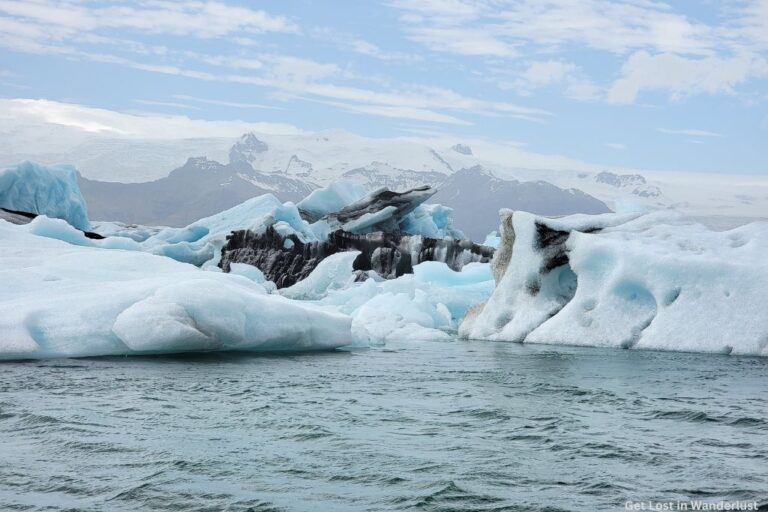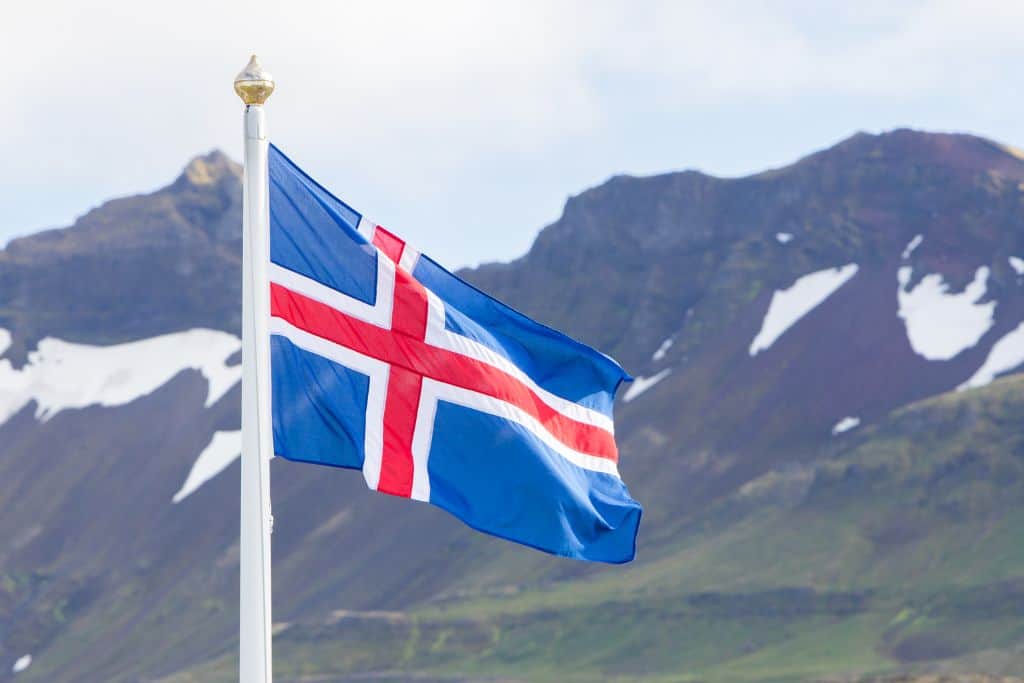
Is Iceland Part of Europe? Or is Iceland in North America?

Iceland is part of Europe. However, this question is more complicated than it may seem. Geographically Iceland is located in the middle of North America and Europe. However, geologically speaking, Iceland is partially on both the European and North American tectonic plates.
So why is Iceland part of Europe? Well, in short, it’s because of political, historical, and cultural reasons in addition to geography and geology.
Get Lost in Wanderlust contains affiliate links. If you make a purchase using one of the links below, we may receive a very small compensation at no extra cost to you. We only recommend products and services we use and trust. Read our disclaimer for more information.


Geography in Iceland: Is Iceland Part of Europe or North America?
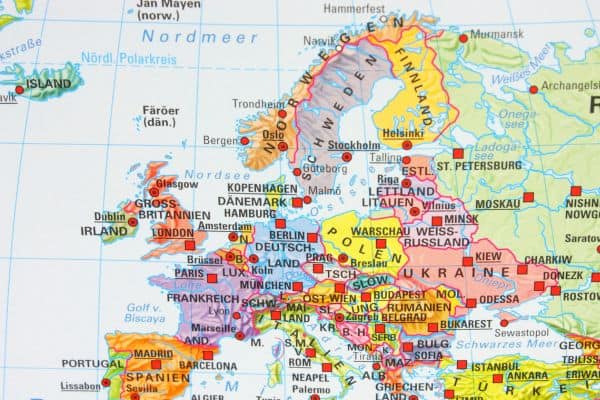
Geographically, Iceland is in an interesting location. Iceland is in the North Atlantic Ocean, almost right in the middle of Europe and North America.
How Close is Iceland to North America? How Close is it to Europe?
Iceland is located around 175 miles from Greenland at the closest point, and Greenland is part of North America (although it is technically politically part of Denmark).
On the other side, Iceland is around 250 miles to the Faroe Islands, around 500 miles to Scotland, and around 590 miles to Norway. So even though Iceland is closer to Greenland (North America), it is also relatively close to several European countries.
Geology in Iceland
Iceland is technically on both the Eurasian and North American Tectonic Plates. Geologically speaking, when you visit Iceland you can technically visit 2 continents in 1 day.

What are Tectonic Plates?
Tectonic Plates are large pieces of the earth’s crust. There are 7 major Tectonic Plates and several minor ones. Many continents are on one large Tectonic Plate and it helps to define what continent a country is a part of.
However, this isn’t always the case, for example Iceland is actually part of two Tectonic Plates, and so other political and cultural factors contribute to Iceland being a part of Europe.
Þingvellir National Park – Where Europe Meets North America in Iceland
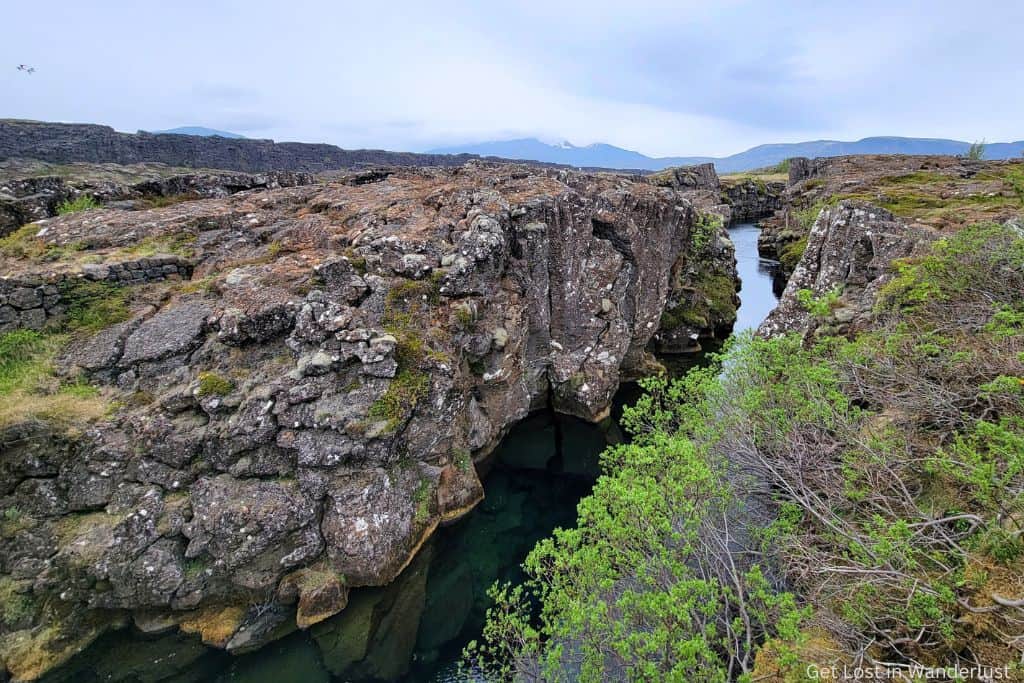
Þingvellir National Park is a National Park in Iceland with such historic and cultural significance that it was deemed a UNESCO World Heritage site. This national park is also extremely unique because it is where the Mid-Atlantic Ridge is located.

Mid-Atlantic Ridge in Þingvellir National Park
The Mid-Atlantic Ridge is extremely unique as it is one of the only places in the entire world that you can see two Tectonic Plates coming together.
At the Mid-Atlantic Ridge, there is a small bridge and on one side you are technically in Europe and the other side you are standing in North America.
Snorkeling Between Two Continents – Silfra
A real bucket list activity is to go Snorkeling at the Mid-Atlantic Ridge. Silfra is a deep crack between the Eurasian and North American plates, and it is possible to go snorkeling here!
This is the only place in the entire world that you can go snorkeling between two continents!
🤿 Visiting Iceland in the future? Click here to see where you can snorkel between two continents!
Why is Iceland Part of Europe and not North America?
So, if Iceland is located almost in the middle of Europe and North America geographically, and is partially on the North American plate and Eurasian plate… then why is it part of Europe? Well, because of the historical, cultural, and political influences Iceland is part of Europe.
Historical Reasons that Iceland is Part of Europe
According to historical sources, Iceland was first settled by Ingólfr Arnarson around the 874AD. Ingólfr Arnarson was from a small village in Norway.
The number of initial settlers was only a few hundred people from Scandinavia. However in the next few hundred years, thousands would migrate from Scandinavia, Ireland, and Scotland. So historically, Iceland has always been intertwined with Europe.

Cultural and Political Reasons that Iceland is Part of Europe
Today, Iceland is very intertwined with Europe both culturally and politically. Two main ways that Iceland is connected to Europe politically and culturally is through the European Economic Area (EEA) and also by being part of the Schengen Area.
Is Iceland in the European Union?
No, Iceland is not in the European Union, which is a partnership between 27 European countries aimed at helping to promote peace and prosperity. While Iceland is not a part of the European Union, it is still connected to Europe as part of the EEA and Schengen Area.
European Economic Area (EEA) Agreement
Iceland is a part of the European Economic Area (EEA). The European Economic Agreement unites all 27 European Union and the EEA countries (Iceland, Norway, and Liechtenstein) in an effort to strengthen both trade and economic policies between those those countries.
Schengen Area
The Schengen Area is made up of several countries and is an agreement in which there are no passport controls/border controls between those countries. Iceland is part of this agreement, along with a few other European countries both in and outside of the European Union.
In Conclusion: Yes, Iceland is Part of Europe
Yes, Iceland is a part of Europe. Iceland’s location may appear to be right in the middle of North America and Europe, but it is indeed a European country. Iceland is a part of Europe due to the historical ties, geographical location, and political/cultural connections to Europe.


![The 5 Best Puffin Tours in Reykjavik Iceland [2026]](https://www.getlostinwanderlust.com/wp-content/uploads/2023/04/Untitled-design-50-768x576.jpg)